Archive for August 2015
What is Coaching?
 Photo Credit: EvokingGenius
2015 started off well for me. I earned my coaching certification! One of the biggest questions I now answer is: “What is coaching?” Before I explain what the type of coaching I deliver is, I would like to explain what the type of coaching I deliver is not.
The word coach, for many people conjures up images of sports. From the time we were young children we played sports or attended sporting events at school. We remember all too well the image of a shouting coach trying to motivate players or persuade an official to make calls favorable for their team.
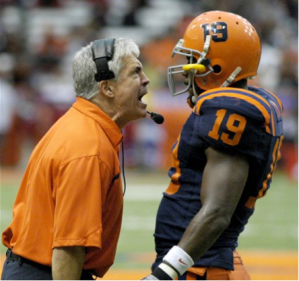
Photo Credit: Root 5 Systemics
For others, the word coach has a different connotation. Some think of a minister, a therapist, or a senior business leader. There are others who may think of a consultant as they confuse coaching with consulting.
For many years, for example, I ran an independent computer consulting practice where I was paid for my expertise in providing the right answers and solutions for my clients. Coaching, however, is very different. As a certified coach, I am not paid to provide answers or solutions for my clients. This is different from sports coaching or consulting where the coach or consultant has more experience and expertise and they are paid to transfer this to the client. In fact, when taking the practical portion of the coaching certification exam, a coach who gives answers to a client fails the exam. As a certified coach, as the old saying goes, my job is to “teach clients how to fish rather than give them a fish.”
During the certification process, my trainer would often tell us “the coach owns the process, the client owns the content.” Put another way, “coaching is a PROCESS expertise, not a CONTENT expertise” said Master Certified Coach and best selling author, Laura Berman Fortgang during her incredible workshop I was part of in July.
So what is coaching? In his New York Times best-selling book: “You Already Know How to Be Great,” Alan Fine defines coaching very simply as “helping others improve their performance.” Of all the definitions that exist for professional coaching, this is the definition I like best.
Early in my corporate career, during my time providing IT support for the financial services arm of General Electric, years before I envisioned myself as a professional coach, I remember the first time I heard the term coaching used in a professional setting. In those days a coach was only hired as a last resort for someone who was having performance issues. It was a secret whispered in the halls of the office. Hence, receiving coaching was considered an act of shame.
Years ago, when I first began working as an IT professional. We used to joke that anyone could call himself or herself an IT professional. All you had to do is show up and say: “I know how to fix computers!” and you were hired. Then the industry realized experience was not enough. There was a need for formal measurement of qualifications through certification. Now most IT professionals hold some sort of certification to validate their competency.
The same was true for many years in the coaching profession. Anyone who worked in human resources or as a business leader could call himself or herself a coach. As I experienced in the IT world, that led to various degrees of quality.
Today, things are very different. Organizations such as the International Coach Federation, the International Coaching Community and the European Mentoring and Coaching Council have raised the bar of the coaching profession by creating global ethics, standards and certification assessments. As a result, the global awareness of the power of coaching has increased. Effective coaching is recognized as an art and a science. Coaching is now considered a badge of honor! People are proud to say they have a coach! That means their company values them and wants to invest in their development because they view them as part of the company’s strategic plans and ultimate success.

Coaching is a powerful tool in maintaining a competitive edge and improving performance.
Top professional athletes such as Roger Federer, Serena Williams and Rory McIlroy recognize the need for a coach to stay on top of their game and maintain their edge throughout various stages of their career. “Corporate athletes” also need coaches. Therefore, many senior business leaders now use a professional coach to help maintain their competitive edge.
Certified professional coaches specialize in life, career, business and executive coaching. Professional coaching is different than giving instruction, advice or sharing expert insights. Professional coaching is a very rewarding process that transforms individuals and organizations by helping them unlock their own rich potential, create new options and value leading to improved performance and satisfaction.

Photo credit: Experto.de
Eddie Turner is an International Certified Coach. He practices executive coaching as a member of the International Coaching Community, the European Mentoring and Coaching Council and the International Coach Federation. Eddie works with leaders who want to accelerate performance and drive business impact. Eddie can be reached at eddieturnerjr@gmail.com or https://twitter.com/eddieturnerjr

 Eddie Turner's Blog