Archive for October 2018
What Is an Emerging Leader and How to Help?
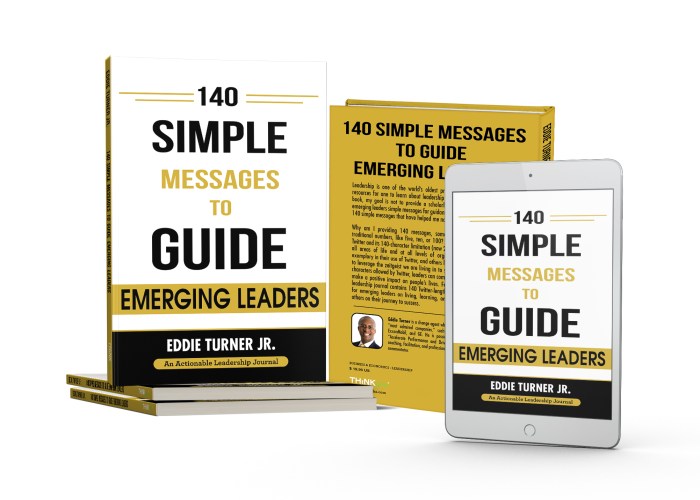
When I decided to write my book for emerging leaders, I interviewed people to learn how others understand the phrase, “emerging leader.” I asked a random sample of individuals the simple question: “What is an emerging leader?” It was quite illuminating to hear the various interpretations.
The most popular response was that an emerging leader is a high-performing employee in a corporation who shows great promise as a leader. Perhaps the next most popular response was that an emerging leader is a young person who shows leadership potential.
Those definitions are certainly accurate. However, there were other definitions I heard and others I have experienced in my corporate career. Individuals who are fresh out of college, those early in their career, and even students are emerging leaders. Also, there is increasingly a new class of employee who transitions into a completely different career than the one they started in.
They may not fit the traditional definition, but they, too, are an emerging leader. Finally, we might say that anyone embarking on a leadership opportunity is an emerging leader.
Because there are several interpretations of what defines an emerging leader, I believe it is important to expand our traditional lens. Let’s examine each word independently.
Emerge
Merriam Webster provides a simple definition of emerge. It means to “become known” or to “come
into view.” That definition is quite fitting in our examination of what it means to be an emerging
leader. If we look at it as “becoming known” as a leader, that means it is far more applicable than the traditional definition. With this expanded lens, the opportunity is open for many more people to “come into view” as a leader in the eyes of others.
Leader
What does it mean to be a leader? Many definitions exist. Having followers makes a person a leader. The act of leading. Having a title or position of superiority. These are basic concepts of
leadership. Leadership, however, is far more complex than these rudimentary definitions.
What good leadership is, what moral leadership is, what transformational leadership is, and much more needs to be considered when defining leadership at its highest level.
In Adaptive Leadership, the work of Dr. Ronald Heifetz, he explores the roles the words authority and influence play in relation to leadership. Truly emerging leaders recognize the power of influence without authority, position, or title in their quest to become known and seen as a leader to others.
How to Help Emerging Leaders
Coaching is a powerful way to support emerging leaders. Coaching helps emerging leaders develop their leadership potential more fully and faster.
As an executive coach, I have worked with emerging leaders identified as high potentials in their organization to help them accelerate their performance. I enjoy working with these individuals who already have leadership titles but are emerging in a new way.
Over the past year, I have had the tremendous privilege of working as an independent professional leadership coach with a different type of emerging leader: students at Rice University’s Doerr Institute for New Leaders. Rice has embarked upon what Founding Managing Director General Tom Kolditz calls, “the most comprehensive leader development initiative at any top-twenty university.” Working with these young people—starting as early as eighteen, in some cases, and spanning into the late twenties when working with doctoral graduate students—has affirmed my belief in what an emerging
leader is and why the lens must be broader than traditionally held.
Working with the Rice students and seeing the measurement and results show the value of what can happen when you use the power of coaching to bend the arch early in developing emerging leaders.
The leadership skills they have acquired are transforming their lives and the lives of those who will be led by them.
In addition to coaching, I believe using a proper assessment tool to help emerging leaders understand themselves is important. In working with leaders, I help them understand the difference between their IQ (intelligence quotient) and their EQ (emotional intelligence). Historically, people were taught it was important to have a high IQ to be a good leader and achieve success. A growing body of research
suggests that having a high EQ is a better indicator of good leadership and future success.
I am a certified emotional intelligence practitioner. When working with emerging leaders, I use the EQ-i 2.0® and EQ 360® as my assessment tool of choice to help identify and develop emotional intelligence.
Conclusion
Everyone, not just a select few, has the potential to become known as a leader. Emerging leaders recognize the power of influence without authority, position or title in their quest to become known as a leader to others.
To help emerging leaders continue their emergence, we must help them continue to develop. One of the best ways to do that is to provide coaching with the use of a proper leadership assessment tool.
The world needs great leaders. Let’s do our part to continue to identify, help, and develop new emerging leaders!
This post is an excerpt from Eddie Turner’s book entitled: 140 Simple Messages to Guide Emerging Leaders. The book is now available on Amazon as a hard cover, paperback and Kindle which spent 10 days in the Top 100 Paid Best-Selling books in the Business Coaching & Mentoring category on Amazon.com! It peaked at #26.
Eddie Turner, The Leadership Excelerator™, is a leadership expert who through executive and leadership coaching, facilitation and professional speaking works with leaders to “Accelerate Performance and Drive Impact!”™ Contact Eddie at (312) 287-9800 or eddie@eddieturnerllc.com

 Eddie Turner's Blog